Recently, the Genre Reading Group met to discuss sports!
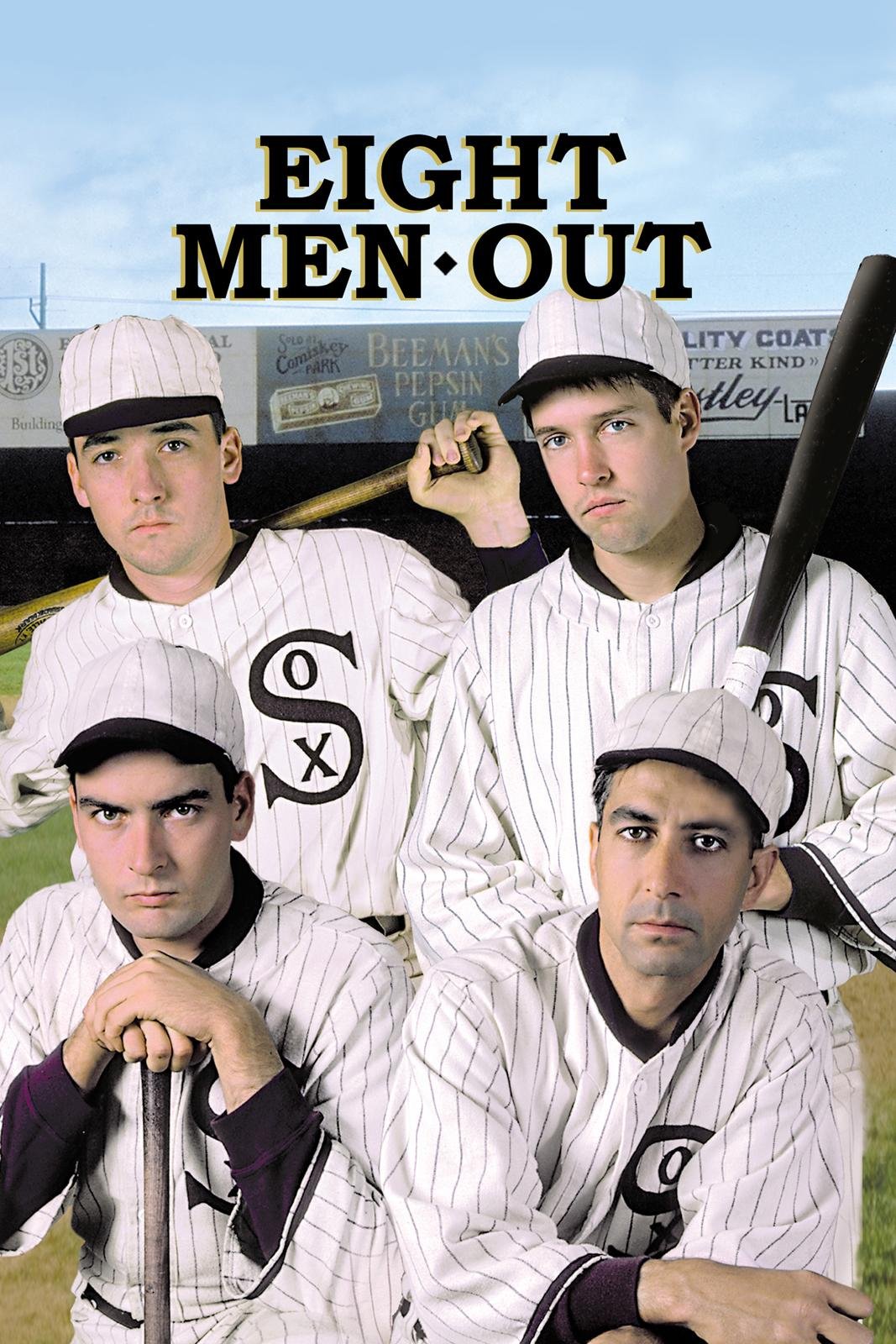
(film) Eight Men Out
(rottentomatoes.com) Writer/director John Sayles'
dramatization of the most infamous episode in professional sports -- the fix of
the 1919 World Series -- is considered by many to be among his best films and
arguably the best baseball movie ever made. This adaptation of Eliot Asinof's
definitive study of the scandal shows how athletes of another era were a
different breed from the well-paid stars of later years. The Chicago White Sox
owner, Charlie Comiskey (Clifton James), is portrayed as a skinflint with
little inclination to reward his team for their spectacular season. When a
gambling syndicate led by Arnold Rothstein (Michael Lerner) gets wind of the
players' discontent, it offers a select group of stars -- including pitcher
Eddie Cicotte (Sayles regular David Strathairn), infielder Buck Weaver (John
Cusack), and outfielder "Shoeless" Joe Jackson (D.B. Sweeney) -- more
money to play badly than they would have earned to try to win the Series
against the Cincinnati Reds. Sayles cast the story with actors who look and
perform like real jocks, and added a colorful supporting cast that includes
Studs Terkel as reporter Hugh Fullerton and Sayles himself as Ring Lardner.
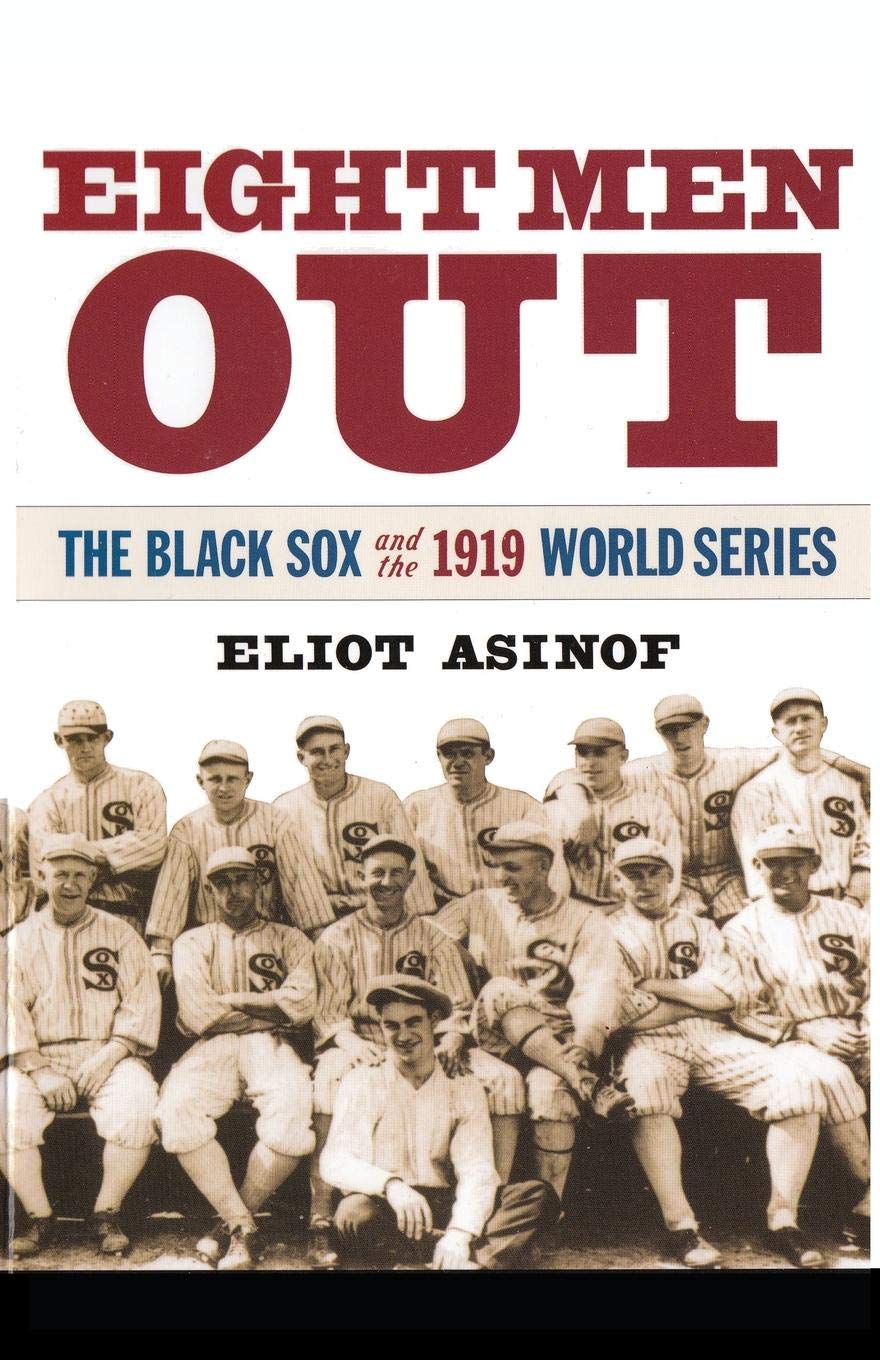
Eight Men Out: The Black Sox and the 1919 World Series by Eliot Asinof
(amazon.com) The headlines proclaimed the 1919 fix of the World
Series and attempted cover-up as "the most gigantic sporting swindle in
the history of America!" First published in 1963, Eight Men Out has become
a timeless classic. Eliot Asinof has reconstructed the entire scene-by-scene
story of the fantastic scandal in which eight Chicago White Sox players
arranged with the nation's leading gamblers to throw the Series in Cincinnati.
Mr. Asinof vividly describes the tense meetings, the hitches in the conniving,
the actual plays in which the Series was thrown, the Grand Jury indictment, and
the famous 1921 trial. Moving behind the scenes, he perceptively examines the
motives and backgrounds of the players and the conditions that made the
improbable fix all too possible. Here, too, is a graphic picture of the American
underworld that managed the fix, the deeply shocked newspapermen who uncovered
the story, and the war-exhausted nation that turned with relief and pride to
the Series, only to be rocked by the scandal. Far more than a superbly told
baseball story, this is a compelling slice of American history in the aftermath
of World War I and at the cusp of the Roaring Twenties.

(film) A League of Their Own
(rottentomatoes.com) The All-American Girls' Professional
Baseball League was founded in 1943, when most of the men of baseball-playing
age were far away in Europe and Asia fighting World War II. The league
flourished until after World War II, when, with the men's return, the league
was consigned to oblivion. Director Penny Marshall and screenwriters Lowell
Ganz and Babaloo Mandel re-create the wartime era when women's baseball looked
to stand a good chance of sweeping the country.
The story begins as a candy-bar
tycoon enlists agents to scour the country to find women who could play ball.
In the backwoods of Oregon, two sisters -- Dottie (Geena Davis) and Kit (Lori
Petty) -- are discovered. Dottie can hit and catch, while Kit can throw a mean
fastball. The girls come to Chicago to try out for the team with other
prospects that include their soon-to-be-teammates Mae Mordabito (Madonna),
Doris Murphy (Rosie O'Donnell), and Marla Hooch (Megan Cavanagh). The team's
owner, Walter Harvey (Gary Marshall) needs someone to coach his team and he
picks one-time home-run champion Jimmy Dugan (Tom Hanks), who is now a
broken-down alcoholic. After a few weeks of training, as Dugan sobers up, the
team begins to show some promise. By the end of the season, the team has
improved to the point where they are competing in the World Series (which is no
big deal, since there are only four teams in the league).
(film)The Natural
(rottentomatoes.com) Nothing was going to stop Roy Hobbs
from fulfilling his boyhood dream of baseball superstardom. 14-year-old Hobbs
fashions a powerful bat from a fallen oak tree. He soon impresses major league
scouts with his ability, fixing his extraordinary talent in the mind of
sportswriter Max Mercy, who eventually becomes instrumental in Hobb's career.
But a meeting with a mysterious woman shatters his dream. Years pass and an
older Hobbs reappears as a rookie from The New York Knights. Overcoming
physical pain and defying those who have a stake in seeing the Knights lose,
Hobbs, with his boyhood bat, has his chance to lead the Knights to the pennant
and to finally fulfill his dream.
The Natural by Bernard Malamud
(amazon.com) The Natural, Bernard Malamud's first novel,
published in 1952, is also the first - and some would say still the best -
novel ever written about baseball. In it Malamud, usually appreciated for his
unerring portrayals of postwar Jewish life, took on very different material -
the story of a superbly gifted "natural" at play in the fields of the
old daylight baseball era - and invested it with the hardscrabble poetry, at
once grand and altogether believable, that runs through all his best work.
Four decades later, Alfred Kazin's comment still holds true:
"Malamud has done something which - now that he has done it! - looks as if
we have been waiting for it all our lives. He has really raised the whole
passion and craziness and fanaticism of baseball as a popular spectacle to its
ordained place in mythology."
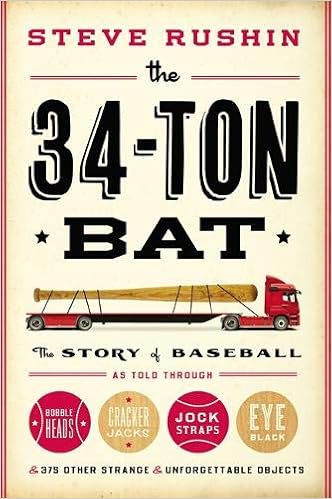
(amazon.com) No sport embraces its wild history quite like
baseball, especially in memorabilia and objects. Sure, there are baseball cards
and team pennants. But there are also huge balls, giant bats, peanuts, cracker
jacks, eyeblack, and more, each with a backstory you have to read to believe.
In The 34-Ton Bat, Sports Illustrated writer Steve Rushin tells
the real, unvarnished story of baseball through the lens of all the things that
make it the game that it is.
Rushin weaves these rich stories -- from ballpark pipe organs played by malevolent organists to backed up toilets at Ebbets Field -- together in their order of importance (from most to least) for an entertaining and compulsive read, glowing with a deep passion for America's Pastime. The perfect holiday gift for casual fans and serious collectors alike, The 34-Ton Bat is a true heavy hitter.
Rushin weaves these rich stories -- from ballpark pipe organs played by malevolent organists to backed up toilets at Ebbets Field -- together in their order of importance (from most to least) for an entertaining and compulsive read, glowing with a deep passion for America's Pastime. The perfect holiday gift for casual fans and serious collectors alike, The 34-Ton Bat is a true heavy hitter.

The Eighty Dollar Champion: Snowman, The Horse That Inspired a Nation by Elizabeth Letts
(amazon.com) Harry de Leyer first saw the horse he would
name Snowman on a truck bound for the slaughterhouse. The recent Dutch
immigrant recognized the spark in the eye of the beaten-up nag and bought him
for eighty dollars. On Harry’s modest farm on Long Island, he ultimately taught
Snowman how to fly. Here is the dramatic and inspiring rise to stardom of an
unlikely duo. One show at a time, against extraordinary odds and some of the most
expensive thoroughbreds alive, the pair climbed to the very top of the sport of
show jumping. Their story captured the heart of Cold War–era America—a story of
unstoppable hope, inconceivable dreams, and the chance to have it all. They
were the longest of all longshots—and their win was the stuff of legend.
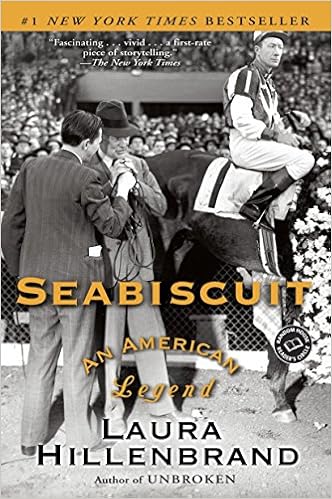
Seabiscuit: An American Legend by Laura Hillenbrand
(amazon.com) Seabiscuit was one of the most electrifying and
popular attractions in sports history and the single biggest newsmaker in the
world in 1938, receiving more coverage than FDR, Hitler, or Mussolini. But his
success was a surprise to the racing establishment, which had written off the
crooked-legged racehorse with the sad tail.
Three men changed Seabiscuit’s
fortunes:
Charles Howard was a onetime bicycle repairman who introduced the automobile to the western United States and became an overnight millionaire. When he needed a trainer for his new racehorses, he hired Tom Smith, a mysterious mustang breaker from the Colorado plains. Smith urged Howard to buy Seabiscuit for a bargain-basement price, then hired as his jockey Red Pollard, a failed boxer who was blind in one eye, half-crippled, and prone to quoting passages from Ralph Waldo Emerson. Over four years, these unlikely partners survived a phenomenal run of bad fortune, conspiracy, and severe injury to transform Seabiscuit from a neurotic, pathologically indolent also-ran into an American sports icon.
Charles Howard was a onetime bicycle repairman who introduced the automobile to the western United States and became an overnight millionaire. When he needed a trainer for his new racehorses, he hired Tom Smith, a mysterious mustang breaker from the Colorado plains. Smith urged Howard to buy Seabiscuit for a bargain-basement price, then hired as his jockey Red Pollard, a failed boxer who was blind in one eye, half-crippled, and prone to quoting passages from Ralph Waldo Emerson. Over four years, these unlikely partners survived a phenomenal run of bad fortune, conspiracy, and severe injury to transform Seabiscuit from a neurotic, pathologically indolent also-ran into an American sports icon.
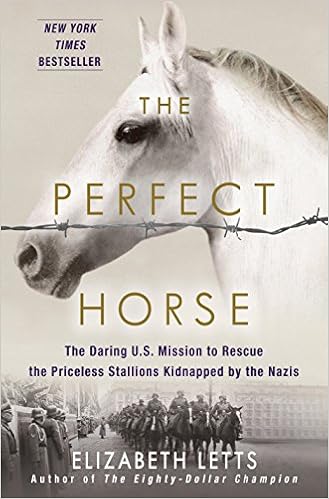
The Perfect Horse: The Daring U.S. Mission to Rescue the Priceless Stallions Kidnapped by the Nazis by Elizabeth Letts
(amazon.com) In the chaotic last days of the war, a small
troop of battle-weary American soldiers captures a German spy and makes an
astonishing find—his briefcase is empty but for photos of beautiful white
horses that have been stolen and kept on a secret farm behind enemy lines.
Hitler has stockpiled the world’s finest purebreds in order to breed the
perfect military machine—an equine master race. But with the starving Russian
army closing in, the animals are in imminent danger of being slaughtered for
food.
With only hours to spare, one of the U.S. Army’s last great cavalrymen, Colonel Hank Reed, makes a bold decision—with General George Patton’s blessing—to mount a covert rescue operation. Racing against time, Reed’s small but determined force of soldiers, aided by several turncoat Germans, steals across enemy lines in a last-ditch effort to save the horses.
Pulling together this multi-stranded story, Elizabeth Letts introduces us to an unforgettable cast of characters: Alois Podhajsky, director of the famed Spanish Riding School of Vienna, a former Olympic medalist who is forced to flee the bomb-ravaged Austrian capital with his entire stable in tow; Gustav Rau, Hitler’s imperious chief of horse breeding, a proponent of eugenics who dreams of genetically engineering the perfect warhorse for Germany; and Tom Stewart, a senator’s son who makes a daring moonlight ride on a white stallion to secure the farm’s surrender.
A compelling account for animal lovers and World War II buffs alike, The Perfect Horse tells for the first time the full story of these events. Elizabeth Letts’s exhilarating tale of behind-enemy-lines adventure, courage, and sacrifice brings to life one of the most inspiring chapters in the annals of human valor.
Rough Magic: Riding the World’s Loneliest Horse Race by Lara
Prior-Palmer
(amazon.com) At the age of nineteen, Lara Prior-Palmer
discovered a website devoted to “the world’s longest, toughest horse race”―an
annual competition of endurance and skill that involves dozens of riders racing
a series of twenty-five wild ponies across 1,000 kilometers of Mongolian
grassland. On a whim, she decided to enter the race. As she boarded a plane to
East Asia, she was utterly unprepared for what awaited her.
Riders often spend years preparing to compete in the Mongol
Derby, a course that re-creates the horse messenger system developed by Genghis
Khan. Many fail to finish. Prior-Palmer had no formal training. She was driven
by her own restlessness, stubbornness, and a lifelong love of horses. She raced
for ten days through extreme heat and terrifying storms, catching a few hours
of sleep where she could at the homes of nomadic families. Battling bouts of
illness and dehydration, exhaustion and bruising falls, she decided she had
nothing to lose. Each dawn she rode out again on a fresh horse, scrambling up
mountains, swimming through rivers, crossing woodlands and wetlands, arid dunes
and open steppe, as American television crews chased her in their jeeps.
Told with terrific suspense and style, in a voice full of
poetry and soul, Rough Magic captures the extraordinary story of one
young woman who forged ahead, against all odds, to become the first female
winner of this breathtaking race.

The Fish’s Eye: Essays About Angling and the Outdoors by Ian
Frazier
(amazon.com) In The Fish's Eye: Essays About Angling
and the Outdoors, Ian Frazier explores his lifelong passion for fishing, fish,
and the aquatic world. He sees the angler's environment all around him―in New
York's Grand Central Station, in the cement-lined pond of a city park, in a
shimmering bonefish flat in the Florida Keys, in the trout streams of the Rocky
Mountains. He marvels at the fishing in the turbid Ohio River by downtown
Cincinnati, where a good bait for catfish is half a White Castle french fry.
The incidentals of the angling experience, the who and the where of it,
interest him as much as what he catches and how. The essays contain sharply
focused observations of the American outdoors, a place filled with human
alterations and detritus that somehow remain defiantly unruined. Frazier's
simple love of the sport lifts him to a straight-ahead angling description
that's among the best contemporary writing on the subject. The Fish's Eye brings
together twenty years of heartfelt, funny, and vivid essays on a timeless
pursuit where so many mysteries, both human and natural, coincide.
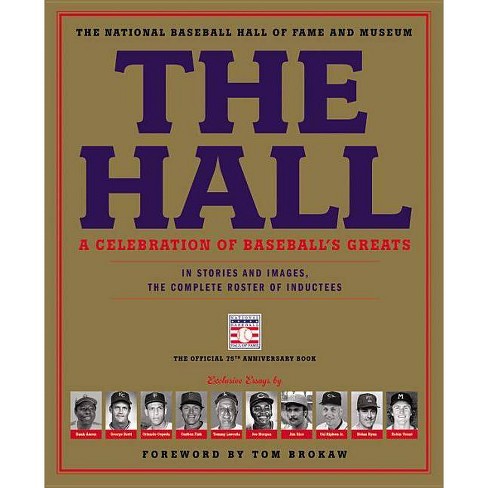
The Hall: A Celebration of Baseball’s Greats In Stories and Images edited by the National Baseball Hall of Fame
(amazon.com) Everyone dreams of Cooperstown. It's a hallowed
name in baseball, for players as well as their fans. It's a house where legends
live; it's everything that's great about the game.
Never before has the National Baseball Hall of Fame and Museum published a complete registry of inductees with plaques, photographs, and extended biographies. In this unique, 75th anniversary edition (2014), read the stories of every player inducted into the Hall, organized by position. Each section begins with an original essay by a living Hall of Famer who played that position: Hank Aaron, George Brett, Orlando Cepeda, Carlton Fisk, Tommy Lasorda, Joe Morgan, Jim Rice, Cal Ripken Jr., Nolan Ryan, and Robin Yount.
Never before has the National Baseball Hall of Fame and Museum published a complete registry of inductees with plaques, photographs, and extended biographies. In this unique, 75th anniversary edition (2014), read the stories of every player inducted into the Hall, organized by position. Each section begins with an original essay by a living Hall of Famer who played that position: Hank Aaron, George Brett, Orlando Cepeda, Carlton Fisk, Tommy Lasorda, Joe Morgan, Jim Rice, Cal Ripken Jr., Nolan Ryan, and Robin Yount.
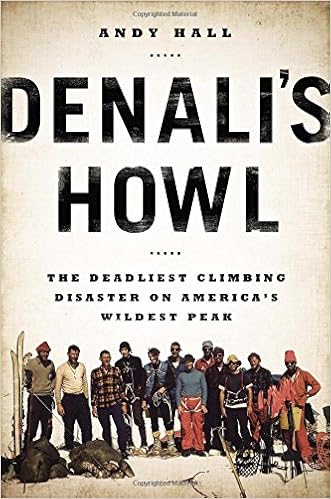
(amazon.com) In the summer of 1967, twelve young men
ascended Alaska’s Mount McKinley—known to the locals as Denali. Engulfed by a
once-in-a-lifetime blizzard, only five made it back down.
Andy Hall, a journalist and son of the park superintendent
at the time, was living in the park when the tragedy occurred and spent years
tracking down rescuers, survivors, lost documents, and recordings of radio
communications. In Denali’s Howl, Hall reveals the full story of the expedition
in a powerful retelling that will mesmerize the climbing community as well as
anyone interested in mega-storms and man’s sometimes deadly drive to challenge
the forces of nature.

The Boys in the Boat: Nine Americans and Their Epic Quest for Gold at the 1936 Berlin Olympics by Daniel James Brown
(amazon.com) For readers of Unbroken, out of the depths
of the Depression comes an irresistible story about beating the odds and
finding hope in the most desperate of times—the improbable, intimate account of
how nine working-class boys from the American West showed the world at the 1936
Olympics in Berlin what true grit really meant.
It was an unlikely quest from the start. With a team composed of the sons of loggers, shipyard workers, and farmers, the University of Washington’s eight-oar crew team was never expected to defeat the elite teams of the East Coast and Great Britain, yet they did, going on to shock the world by defeating the German team rowing for Adolf Hitler. The emotional heart of the tale lies with Joe Rantz, a teenager without family or prospects, who rows not only to regain his shattered self-regard but also to find a real place for himself in the world. Drawing on the boys’ own journals and vivid memories of a once-in-a-lifetime shared dream, Brown has created an unforgettable portrait of an era, a celebration of a remarkable achievement, and a chronicle of one extraordinary young man’s personal quest.
It was an unlikely quest from the start. With a team composed of the sons of loggers, shipyard workers, and farmers, the University of Washington’s eight-oar crew team was never expected to defeat the elite teams of the East Coast and Great Britain, yet they did, going on to shock the world by defeating the German team rowing for Adolf Hitler. The emotional heart of the tale lies with Joe Rantz, a teenager without family or prospects, who rows not only to regain his shattered self-regard but also to find a real place for himself in the world. Drawing on the boys’ own journals and vivid memories of a once-in-a-lifetime shared dream, Brown has created an unforgettable portrait of an era, a celebration of a remarkable achievement, and a chronicle of one extraordinary young man’s personal quest.


 Posts


