The publication of Rachel Carson’s New York Times
bestseller “Silent Spring” in 1962 launched public awareness and
concern for living organisms, the environment and the inextricable links
between pollution and public health. For the next 8 years, momentum built,
culminating in the first Earth Day on April 22, 1970. By the end of 1970, that
first Earth Day led to the creation of the United States Environmental
Protection Agency and the passage of the Clean Air, Clean Water and Endangered
Species Acts.
Earth Day’s fight for environmental awareness went global in
1990 and has been a powerful movement ever since, widely recognized as the
largest secular observance in the world and marked by more than a billion people
every year as a day of action to change human behavior and provoke policy
changes.
On April 22 this year, the world will be celebrating 50
years of Earth Day and its empowering of individuals with the information, the tools,
the messaging and the communities needed to make an impact and drive change (https://www.earthday.org/)
Here are a few ways your library card can help you bridge
the (social) distance for a celebration at home!
A wealth of ebooks and downloadable audiobooks are available
on a variety of ecological topics.Click
here for a selection highlighting the effect of humans on nature.If you’re interested in another topic or a
specific title, search the catalog and use the refining selections for narrowing to available
digital formats.
There are over 700 streaming videos about Earth available
through Hoopla and Kanopy (access online at www.eolib.org
or download from your app store). Click
here to view the list. Hoopla and Kanopy have limited service areas
depending upon residency.Check with
your local library to be sure.
Get some gardening tips form HGTV Magazine, Southern Living,
or Better Homes & Gardens and check out the latest issue of National Geographic
to travel the globe from the comfort of home with Flipster, our digital
magazine service. You can access it from
our website or download from your app store.
Need more in-depth research for a school project. EBSCO’s
free GreenFILE database has you covered. Find it in the Health/Science section
of the Jefferson
County Library Cooperative’s databases.
Brush up on your outdoor skills with classes in gardening,
ecology, bird watching, wildlife rehabilitation, and more on Universal Class, accessible via our website.
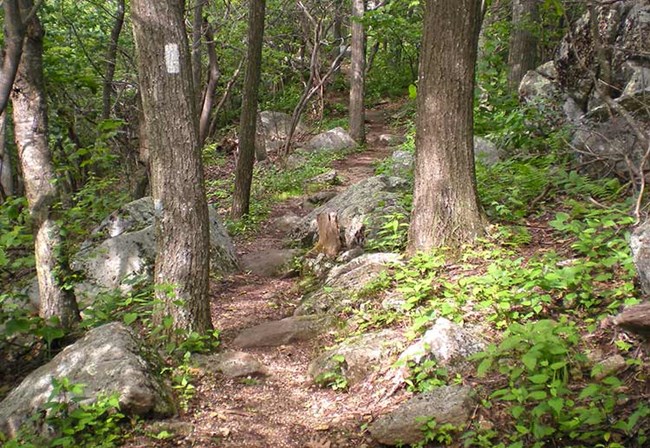
Get out into nature the best way you can!Here are a few options:
The final Genre Reading Group meeting of the year will take
place on Tuesday, December 29th at 6:30pm, as usual. The library will be on Holiday Hours and will
be closed, but I will be here to let you in to the building. It will be one of our biannual Salon
Discussion so there is no assigned topic.
You may bring whatever kind/topic of book you’d like to share with the
group.
Last week, GRG met to discuss pets & animals!
Buttercups and Daisy by Elizabeth Cragoe
This book is too old and too obscure and as such, has fallen off the
radar. I have found no official reviews,
so here is my personal one. Elizabeth Cragoe and her husband, city dwellers
both, pick up and move to the Welsh countryside in the early 1970’s to take up
life as dairy farmers in this charming tale, told during the moment in history
when industrialized farming was just beginning to become popular. She speaks candidly about how her animals
fare in making the swap to more industrial milking practices as well as how
chickens perform in battery cages. It is
an interesting look at the lives of rural Welsh farmers (I cannot pronounce ANY
of the farms, landscape features, nor most of the characters’ names) as well as
the evolution of farming in Europe. I
love her family and look forward to reading more of her books out there in the
world if I can find them.
Once Upon a Flock: Life With My Soulful Chickens by Lauren
Scheuer
(amazon) When longtime illustrator and lover of power tools Lauren Scheuer was
looking for a project, she got the idea to raise backyard chickens. Her husband
and teenage daughter looked on incredulously as coop sketches and
chicken-raising books filled their New England home. But when the chicks
arrived, the whole family fell in love with the bundles of fluff and the wild
adventures began.
Rabbit series by John Updike
(wikipedia) Updike's most famous work is his "Rabbit" series (the
novels Rabbit, Run; Rabbit Redux; Rabbit Is Rich; Rabbit at Rest; and the novella Rabbit Remembered), which chronicles the life of the
middle-class everyman Harry "Rabbit" Angstrom over the
course of several decades, from young adulthood to death. Both Rabbit Is
Rich (1982) and Rabbit at Rest (1990) were recognized with the Pulitzer
Prize. Updike is one of only three authors to win the Pulitzer Prize for
Fiction more than once (the others were Booth Tarkington and William
Faulkner). He published more than twenty novels and more than a dozen short
story collections, as well as poetry, art criticism, literary criticism and
children's books. Hundreds of his stories, reviews, and poems appeared in The
New Yorker starting in 1954. He also wrote regularly for The New York
Review of Books.
Nova: Dawn of Humanity (2015)
NOVA and National Geographic present exclusive access to an
astounding discovery of ancient fossil human ancestors. Deep in a South African
cave, a special team of experts has brought to light an unprecedented wealth of
fossils belonging to a crucial gap in the record of our origins that spans the
transition between the ape-like australopithecines (such as the famous Lucy)
and the earliest members of the human family. At the center of the discovery is
paleoanthropologist Lee Berger, a character brimming with enthusiasm and
opinions, whose claims have stirred long controversy in the contentious field
of human origins. Join NOVA to solve a two million year-old "crime
scene" and dig into extraordinary new clues about what made us human.
(amazon) The heartwarming tale of an irrepressible donkey
who needed a home―and forever changed a family. Rachel Anne Ridge was at the end of her rope. The economy had crashed, taking
her formerly thriving business along with it. She had been a successful artist,
doing work she loved, but now she felt like a failure. How would her family pay
their bills? What would the future hold? If only God would somehow let them
know that everything was going to be all right . . . and then Flash the donkey
showed up.
(amazon) When Humphrey hears that school is ending, he can't
believe his ears. What's a classroom hamster to do if there's no more school?
It turns out that Mrs. Brisbane has planned something thrilling for Humphrey
and Og the frog: they're going to Camp Happy Hollow with Ms. Mac and lots of
the kids from Room 26! Camp is full of FUN-FUN-FUN new experiences, but it's
also a little scary. There are fur-raising wild sounds and smells, and there's
something called the Howler to watch out for. Humphrey is always curious about
new adventures, but could camp be too wild even for him?
(amazon) Playful and affectionate, hamsters can make
terrific class pets. In this book you'll learn about the different types of
hamsters, whether they like to live alone or in groups, what kind of food they
eat, how much exercise they need, and the best kind of cage for them. Hamsters
can be shy at first, but once they get to know you, they can be held. They will
make a delightful addition to any classroom.
(amazon) Written at a time of profound anxiety caused by the
illness of his mother, Nobel Prize winner John Steinbeck draws on his memories
of childhood in these stories about a boy who embodies both the rebellious
spirit and the contradictory desire for acceptance of early adolescence. Unlike
most coming-of-age stories, the cycle does not end with a hero “matured” by
circumstances. The Red Pony is imbued with a sense of loss. Jody’s
encounters with birth and death express a common theme in Steinbeck’s fiction:
They are parts of the ongoing process of life, “resolving” nothing. The
Red Pony was central not only to Steinbeck’s emergence as a major American
novelist but to the shaping of a distinctly mid twentieth-century genre,
opening up a new range of possibilities about the fictional presence of a
child’s world.
The Pugilist at Rest: Stories by Thom Jones In the short story "I Want to Live," Mrs. Wilson
is a woman diagnosed with an advanced cancer. Her husband had died from cancer
ten years earlier. Her memories of the past include a very precocious chicken.
Essays of E.B. White by E.B. White (nytimes.com) “In 1948, E. B. White wrote "Death of a
Pig" which appeared in Atlantic Monthly, an oddly affecting account of how
he failed to save the life of a sick pig, made ironic by the fact that the pig
had been bought to act its part in the "tragedy" of the spring pig
fattened for winter butchering. Since literature is not life, White set out in
"Charlotte's Web" to save his pig in retrospect, this time not from
an unexpected illness but from its presumably fated "tragedy."”
(amazon) How much of an impact can an animal have? How many
lives can one cat touch? How is it possible for an abandoned kitten to
transform a small library, save a classic American town, and eventually become
famous around the world? You can't even begin to answer those questions until
you hear the charming story of Dewey Readmore Books, the beloved library cat of Iowa.
Dewey's story starts in the worst possible way. Only a few weeks old, on the
coldest night of the year, he was stuffed into the returned book slot at the
Spencer Public Library. He was found the next morning by library director,
Vicki Myron, a single mother who had survived the loss of her family farm, a
breast cancer scare, and an alcoholic husband. Dewey won her heart, and the
hearts of the staff, by pulling himself up and hobbling on frostbitten feet to
nudge each of them in a gesture of thanks and love. For the next nineteen
years, he never stopped charming the people of Spencer with his enthusiasm,
warmth, humility, (for a cat) and, above all, his sixth sense about who needed
him most.
As his fame grew from town to town, then state to state, and finally,
amazingly, worldwide, Dewey became more than just a friend; he became a source
of pride for an extraordinary Heartland farming town pulling its way slowly
back from the greatest crisis in its long history.
While the O'Neal Library undergoes a major interior renovation, visit the temporary express location in Mountain Brook City Hall. Open Wednesdays 9am -2pm (closes early for city court session), and 9am-5pm the rest of the week. The Library is not open on
weekends. Have a question? Let us know at help@oneallibrary.org!
While the O'Neal Library undergoes a major interior renovation, visit the temporary express location in Mountain Brook City Hall. Open Wednesdays 9am -2pm (closes early for city court session), and 9am-6pm the rest of the week. The Library is not open on
weekends.







 Posts
Posts


