Showing posts with label grg. Show all posts

Thursday, November 30, 2017

spy novels


Mark your calendars and join us on Thursday, December 7 at 7pm for a live reading of Charles Dickens’ beloved story, “A Christmas Carol.”  Your favorite neighborhood librarians, shop owners, and friends will appear as characters in the story.  The reading should last approximately one hour and live music will accompany.  Admission is free and cider, hot chocolate, and cookies will be available!

This week, the Genre Reading Group met to discussion spy/espionage novels!
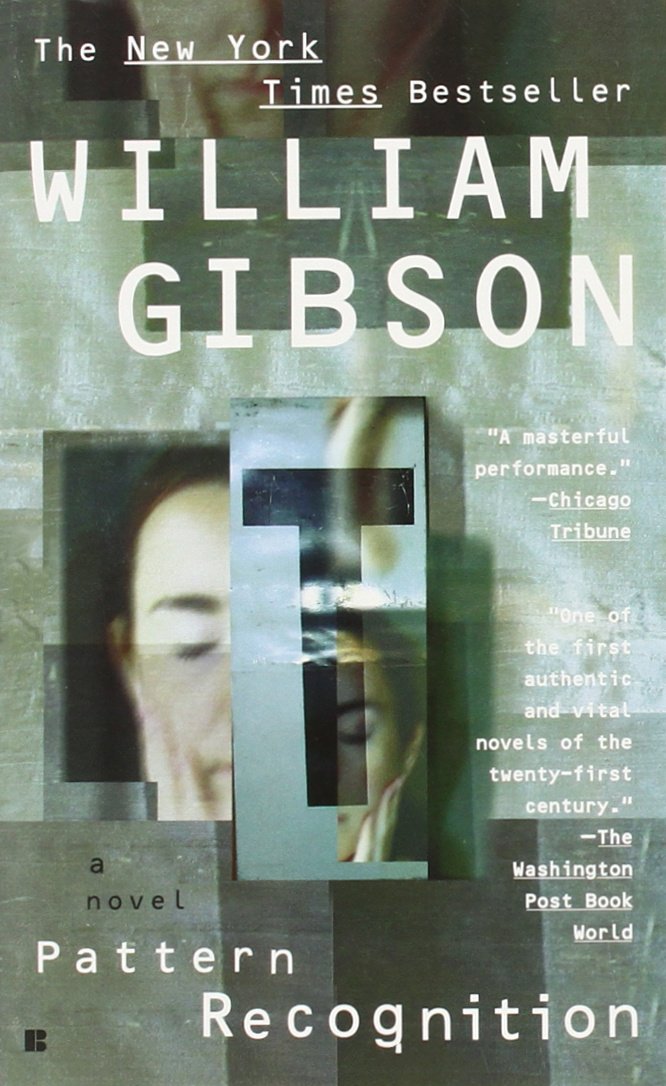
Image result for pattern recognition gibson
Pattern Recognition by William Gibson
Cayce Pollard is a new kind of prophet—a world-renowned “coolhunter” who predicts the hottest trends. While in London to evaluate the redesign of a famous corporate logo, she’s offered a different assignment: find the creator of the obscure, enigmatic video clips being uploaded to the internet—footage that is generating massive underground buzz worldwide.

Still haunted by the memory of her missing father—a Cold War security guru who disappeared in downtown Manhattan on the morning of September 11, 2001—Cayce is soon traveling through parallel universes of marketing, globalization, and terror, heading always for the still point where the three converge. From London to Tokyo to Moscow, she follows the implications of a secret as disturbing—and compelling—as the twenty-first century promises to be...
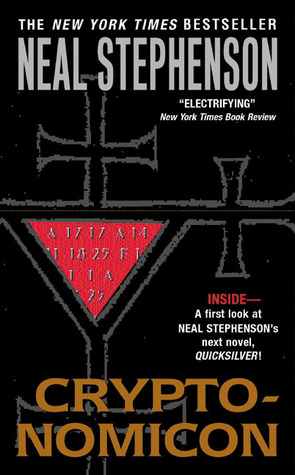
Image result for cryptonomicon stephenson
Cryptonomicon by Neal Stephenson
In 1942, Lawrence Pritchard Waterhouse—mathematical genius and young Captain in the U.S. Navy—is assigned to detachment 2702. It is an outfit so secret that only a handful of people know it exists, and some of those people have names like Churchill and Roosevelt. The mission of Waterhouse and Detachment 2702—commanded by Marine Raider Bobby Shaftoe-is to keep the Nazis ignorant of the fact that Allied Intelligence has cracked the enemy's fabled Enigma code. It is a game, a cryptographic chess match between Waterhouse and his German counterpart, translated into action by the gung-ho Shaftoe and his forces.

Fast-forward to the present, where Waterhouse's crypto-hacker grandson, Randy, is attempting to create a "data haven" in Southeast Asia—a place where encrypted data can be stored and exchanged free of repression and scrutiny. As governments and multinationals attack the endeavor, Randy joins forces with Shaftoe's tough-as-nails granddaughter, Amy, to secretly salvage a sunken Nazi submarine that holds the key to keeping the dream of a data haven afloat. But soon their scheme brings to light a massive conspiracy with its roots in Detachment 2702 linked to an unbreakable Nazi code called Arethusa. And it will represent the path to unimaginable riches and a future of personal and digital liberty...or to universal totalitarianism reborn.

A breathtaking tour de force, and Neal Stephenson's most accomplished and affecting work to date, Cryptonomicon is profound and prophetic, hypnotic and hyper-driven, as it leaps forward and back between World War II and the World Wide Web, hinting all the while at a dark day-after-tomorrow. It is a work of great art, thought and creative daring; the product of a truly iconoclastic imagination working with white-hot intensity.
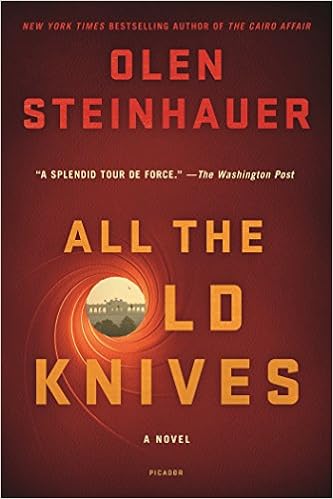
Image result for all the old knives steinhauer
All the Old Knives by Olen Steinhauer
Six years ago in Vienna, terrorists took over a hundred hostages, and the rescue attempt went terribly wrong. The CIA's Vienna station gathered intel during those tense hours, assimilating facts from the ground and from an agent on the inside. So when it all went wrong, the question had to be asked: Had their agent been compromised, and how?

Two of the CIA's case officers in Vienna, Henry Pelham and Celia Harrison, were lovers at the time, and on the night of the hostage crisis Celia decided she'd had enough. She left the agency, married and had children, and now lives in idyllic Carmel-by-the-Sea. Henry is still a case officer in Vienna, and has traveled to California to see her one more time, to relive the past, maybe, or to put it behind him once and for all.

But neither of them can forget that long-ago question: Had their agent been compromised? If so, how? Each also wonders what role tonight's dinner companion might have played in the way the tragedy unfolded six years ago.

Image result for 007
The James Bond Series by Ian Fleming
The James Bond literary franchise is a series of novels and short stories, first published in 1953 by Ian Fleming, a British author, journalist, and former naval intelligence officer. James Bond, often referred to by his code name, 007, is a British Secret Service agent; the character was created by journalist and author Ian Fleming, and first appeared in his 1953 novel Casino Royale; the books are set in a contemporary period, between May 1951 and February 1964. Fleming went on to write a total of twelve novels and two collections of short stories, all written at his Jamaican home Goldeneye and published annually. Two of his books were published after his death in 1964.

Image result for sympathizer nguyen
The Sympathizer by Viet Thanh Nguyen
The winner of the 2016 Pulitzer Prize for Fiction, as well as six other awards, The Sympathizer is the breakthrough novel of the year. With the pace and suspense of a thriller and prose that has been compared to Graham Greene and Saul Bellow, The Sympathizer is a sweeping epic of love and betrayal. The narrator, a communist double agent, is a “man of two minds,” a half-French, half-Vietnamese army captain who arranges to come to America after the Fall of Saigon, and while building a new life with other Vietnamese refugees in Los Angeles is secretly reporting back to his communist superiors in Vietnam. The Sympathizer is a blistering exploration of identity and America, a gripping espionage novel, and a powerful story of love and friendship.

Image result for whirlwind garber
Whirlwind by Joseph Garber
Charlie McKenzie was the best in the business of CIA dirty work -- until he was double-crossed by his bosses and jailed to cover up a mammoth intelligence blunder. Now they want him back. And Charlie wants to get even.

A Russian spy has stumbled upon the most important U.S. military breakthrough since the atomic bomb -- a top-secret technology called Whirlwind -- and only the disgraced former operative has the skills necessary to retrieve it. But Charlie already knows too much. And once Whirlwind is back in Company hands, his enemies intend to betray him again -- and put him out of the game permanently.
However, Charlie McKenzie has other plans. And he won't be that easy to kill.

Image result for mata hari garbo movie poster
Mata Hari: the name breathes mystery, intrigue and sexual allure. Who better to play the notorious World War I spy than Greta Garbo, the enigmatic, exquisite screen icon called The Swedish Sphinx? Garbo is mesmerizing as the dancer-turned-German secret agent in a wartime Paris seething with secrets and betrayal. The notable supporting cast includes Lionel Barrymore as a Russian general besotted with her, Lewis Stone as an icy master spy, and Ramon Novarro as a handsome aviator who wins the heart Mata Hari did not know she possessed. With the world at war, love was her weapon. And the only men she couldn't seduce were the 12 in the firing squad that ended her tragic and tumultuous life.
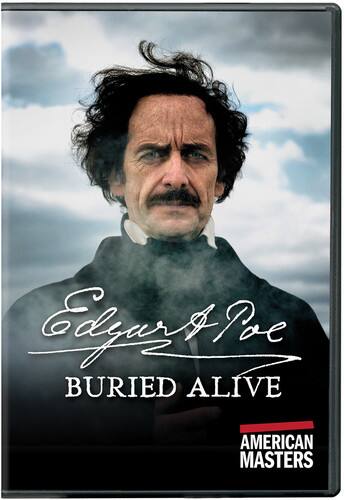
Image result for American Masters presents Edgar Allan Poe: Buried Alive
Edgar Allan Poe: Buried Alive draws on the rich palette of Poe's evocative imagery and sharply drawn plots to tell the real story of the notorious author. Featuring Tony Award-winning actor Denis O'Hare, the film explores the misrepresentations of Poe as an alcoholic madman. It reveals the way in which Poe tapped into what it means to be a human in our modern and sometimes frightening world.

Image result for our man in havana book cover
Our Man in Havana by Graham Greene
MI6’s man in Havana is Wormold, a former vacuum-cleaner salesman turned reluctant secret agent out of economic necessity. To keep his job, he files bogus reports based on Charles Lamb’s Tales from Shakespeare and dreams up military installations from vacuum-cleaner designs. Then his stories start coming disturbingly true…

First published in 1959 against the backdrop of the Cold War, Our Man in Havana remains one of Graham Greene’s most widely read novels. It is an espionage thriller, a penetrating character study, and a political satire of government intelligence that still resonates today.
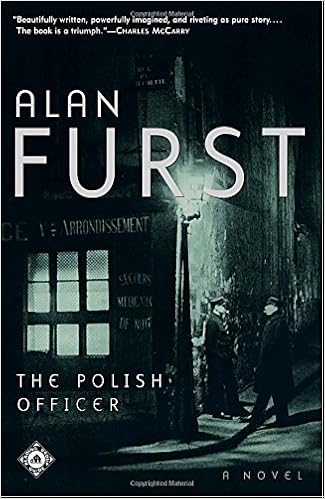
Image result for polish officer book cover
The Polish Officer by Alan Furst
September 1939. As Warsaw falls to Hitler’s Wehrmacht, Captain Alexander de Milja is recruited by the intelligence service of the Polish underground. His mission: to transport the national gold reserve to safety, hidden on a refugee train to Bucharest. Then, in the back alleys and black-market bistros of Paris, in the tenements of Warsaw, with partizan guerrillas in the frozen forests of the Ukraine, and at Calais Harbor during an attack by British bombers, de Milja fights in the war of the shadows in a world without rules, a world of danger, treachery, and betrayal.
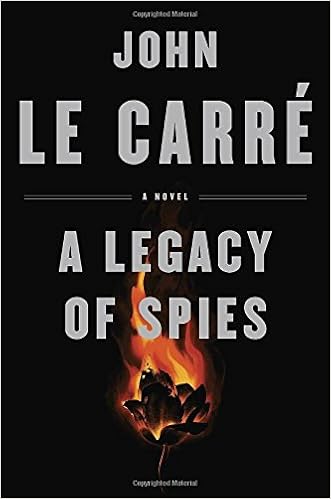
Image result for legacy of spies book cover
A Legacy of Spies by John Le Carre
Peter Guillam, staunch colleague and disciple of George Smiley of the British Secret Service, otherwise known as the Circus, is living out his old age on the family farmstead on the south coast of Brittany when a letter from his old Service summons him to London. The reason? His Cold War past has come back to claim him. Intelligence operations that were once the toast of secret London, and involved such characters as Alec Leamas, Jim Prideaux, George Smiley and Peter Guillam himself, are to be scrutinized by a generation with no memory of the Cold War and no patience with its justifications.

Interweaving past with present so that each may tell its own intense story, John le CarrĂ© has spun a single plot as ingenious and thrilling as the two predecessors on which it looks back: The Spy Who Came in from the Cold and Tinker Tailor Soldier Spy. In a story resonating with tension, humor and moral ambivalence, le CarrĂ© and his narrator Peter Guillam present the reader with a legacy of unforgettable characters old and new.

Image result for spy who came in from the cold book cover
In the shadow of the newly erected Berlin Wall, Alec Leamas watches as his last agent is shot dead by East German sentries. For Leamas, the head of Berlin Station, the Cold War is over. As he faces the prospect of retirement or worse—a desk job—Control offers him a unique opportunity for revenge. Assuming the guise of an embittered and dissolute ex-agent, Leamas is set up to trap Mundt, the deputy director of the East German Intelligence Service—with himself as the bait. In the background is George Smiley, ready to make the game play out just as Control wants. Setting a standard that has never been surpassed, The Spy Who Came in from the Cold is a devastating tale of duplicity and espionage.

Image result for kill artist daniel silva
The Gabriel Allon series by Daniel Silva
Gabriel Allon is a master art restorer and sometime officer of Israeli intelligence.

Wednesday, February 1, 2017

climate science

Mark your calendars!

--Sunday, February 5th at 2pm, the final film in The Holocaust in Film series, “The People vs. Fritz Bauer"

--Our February GRG meeting is one Tuesday early this month on February 21st at 6:30pm and the topic up for discussion is biographical fiction.  There is a selection of this genre on display at the 2nd floor reference desk.

--The Friends of the Library annual Book Sale is the last weekend of the month.  The invite-only preview party is Thursday, February 23 @ 6pm.  Didn’t receive an invitation?  No worries!  You can join the Friends at the door for a $25 donation.  The sale opens to the public Friday-Saturday, 10am-5pm, and Sunday 1pm-4pm. 

This month, we discussed books on climate science.  The conversation was lively!

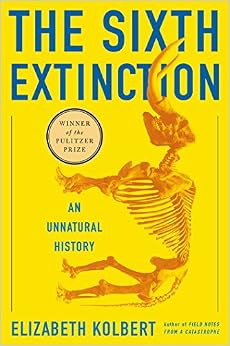
Image result for sixth extinction kolbert
WINNER OF THE PULITZER PRIZE
ONE OF THE NEW YORK TIMES BOOK REVIEW'S 10 BEST BOOKS OF THE YEAR
A NEW YORK TIMES BESTSELLER
A NATIONAL BOOK CRITICS CIRCLE AWARD FINALIST

A major book about the future of the world, blending intellectual and natural history and field reporting into a powerful account of the mass extinction unfolding before our eyes.

Over the last half-billion years, there have been Five mass extinctions, when the diversity of life on earth suddenly and dramatically contracted. Scientists around the world are currently monitoring the sixth extinction, predicted to be the most devastating extinction event since the asteroid impact that wiped out the dinosaurs. This time around, the cataclysm is us. In prose that is at once frank, entertaining, and deeply informed, New Yorker writer Elizabeth Kolbert tells us why and how human beings have altered life on the planet in a way no species has before. Interweaving research in half a dozen disciplines, descriptions of the fascinating species that have already been lost, and the history of extinction as a concept, Kolbert provides a moving and comprehensive account of the disappearances occurring before our very eyes. She shows that the sixth extinction is likely to be mankind's most lasting legacy, compelling us to rethink the fundamental question of what it means to be human.

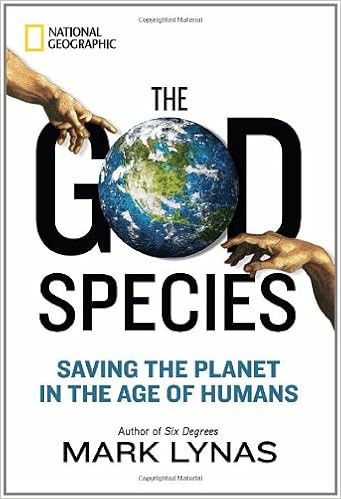
Image result for god species lynas
We humans are the God species, both the creators and destroyers of life on this planet. As we enter a new geological era - the Anthropocene - our collective power now overwhelms and dominates the major forces of nature.

But from the water cycle to the circulation of nitrogen and carbon through the entire Earth system, we are coming dangerously close to destroying the planetary life-support systems that sustain us. In this controversial new book, Royal Society Science Books Prize winner Mark Lynas shows us how we must use our new mastery over nature to save the planet from ourselves.

Taking forward the work of a brilliant new group of Earth-system scientists who have mapped out our real 'planetary boundaries', Lynas draws up a radical manifesto calling for the increased use of environmentally-friendly technologies like genetic engi- neering and nuclear power as part of a global effort to use humanity's best tools to protect and nurture the biosphere.

Ecological limits are real, but economic limits are not, Lynas contends. We can and must feed a richer population of nine billion people in decades to come, whilst also respecting the nine planetary boundaries - from biodiversity to ocean acidification - now identified and quantified by scientists.

Ripping up years of environmental orthodoxy, he reveals how the prescriptions of the current green movement are likely to hinder as much as help our vitally-needed effort to use science and technology to play God and save the planet.

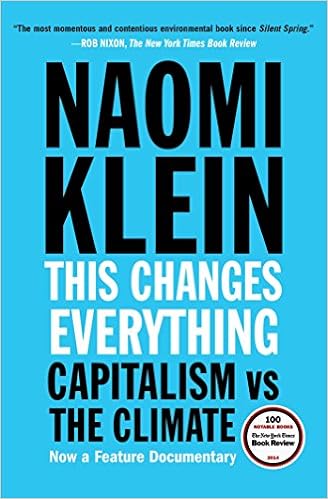
Image result for this changes everything naomi klein
The most important book yet from the author of the international bestseller The Shock Doctrine, a brilliant explanation of why the climate crisis challenges us to abandon the core “free market” ideology of our time, restructure the global economy, and remake our political systems.

In short, either we embrace radical change ourselves or radical changes will be visited upon our physical world. The status quo is no longer an option.

In This Changes Everything Naomi Klein argues that climate change isn’t just another issue to be neatly filed between taxes and health care. It’s an alarm that calls us to fix an economic system that is already failing us in many ways. Klein meticulously builds the case for how massively reducing our greenhouse emissions is our best chance to simultaneously reduce gaping inequalities, re-imagine our broken democracies, and rebuild our gutted local economies. She exposes the ideological desperation of the climate-change deniers, the messianic delusions of the would-be geoengineers, and the tragic defeatism of too many mainstream green initiatives. And she demonstrates precisely why the market has not—and cannot—fix the climate crisis but will instead make things worse, with ever more extreme and ecologically damaging extraction methods, accompanied by rampant disaster capitalism.

Klein argues that the changes to our relationship with nature and one another that are required to respond to the climate crisis humanely should not be viewed as grim penance, but rather as a kind of gift—a catalyst to transform broken economic and cultural priorities and to heal long-festering historical wounds. And she documents the inspiring movements that have already begun this process: communities that are not just refusing to be sites of further fossil fuel extraction but are building the next, regeneration-based economies right now.

Can we pull off these changes in time? Nothing is certain. Nothing except that climate change changes everything. And for a very brief time, the nature of that change is still up to us.

Image result for harmony prince charles
Harmony: A New Way of Looking at Our World by Charles HRH The Prince of Wales
For the first time, His Royal Highness Charles, the Prince of Wales, shares his views on how mankind’s most pressing modern challenges are rooted in our disharmony with nature. In the vein of Al Gore’s An Inconvenient Truth and Van Jones’ Green Collar Economy, Prince Charles presents the compelling case that solutions to our most dire crises—from climate change to poverty—lie in regaining a balance with the world around us.

Image result for climate change ladybird expert
GENERAL DISCUSSION: Prince Charles’ new book, “Climate Change: A Ladybird Expert Book,” came out last month. 
Climate Change is the first book of a new series of titles written for an adult readership and produced in the same iconic small hardback format pioneered by the original Ladybirds.

Written by some of the leading lights and outstanding communicators in their fields, the Ladybird Expert books provide clear, accessible and authoritative introductions, informed by expert opinion, to subjects drawn from science, history and culture.

Image result for silent spring by rachel carson
Silent Spring by Rachel Carson
Rachel Carson’s Silent Spring was first published in three serialized excerpts in the New Yorker in June of 1962. The book appeared in September of that year and the outcry that followed its publication forced the banning of DDT and spurred revolutionary changes in the laws affecting our air, land, and water. Carson’s passionate concern for the future of our planet reverberated powerfully throughout the world, and her eloquent book was instrumental in launching the environmental movement. It is without question one of the landmark books of the twentieth century.  

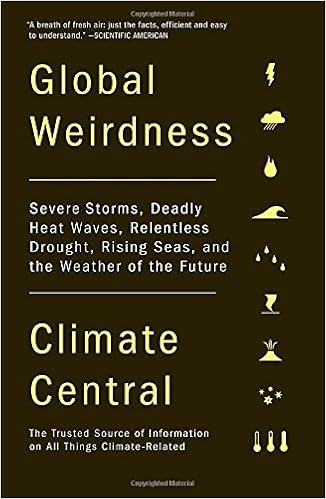
Image result for global weirdness climate central
Global Weirdness summarizes everything we know about the science of climate change, explains what is likely to happen to the climate in the future, and lays out, in practical terms, what we can do to avoid further shifts. In fifty easy-to-read entries, Climate Central tackles basic questions such as: 

-Is climate ever “normal”?
-Why and how do fossil-fuel burning and other human practices produce greenhouse gases?
-What natural forces have caused climate change in the past?
-What risks does climate change pose for human health?
-What accounts for the diminishment of mountain glaciers and small ice caps around the world since 1850?
-What are the economic costs and benefits of reducing carbon emissions?

Illustrated throughout with clarifying graphics, Global Weirdness enlarges our understanding of how climate change affects our daily lives, and arms us with the incontrovertible facts we need to make informed decisions about the future of the planet, and of humankind.

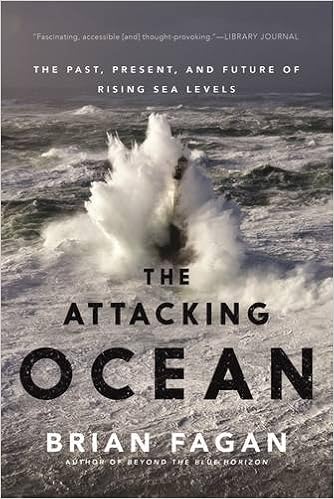
Image result for attacking ocean fagan
The past fifteen thousand years-the entire span of human civilization-have witnessed dramatic sea level changes, which began with rapid global warming at the end of the Ice Age, when coastlines were more than seven hundred feet below modern levels. Over the next ten millennia, the oceans climbed in fits and starts. These rapid changes had little effect on those humans who experienced them, partly because there were so few people on earth, and also because those people were able to adjust readily to new coastlines.

Global sea levels stabilized about six thousand years ago, except for local adjustments that caused often significant changes to places such as the Nile Delta. The curve of inexorably rising seas flattened out as urban civilizations developed in Egypt, Mesopotamia, and South Asia. The earth's population boomed, quintupling from the time of Christ to the Industrial Revolution. The threat from the oceans increased with our crowding along shores to live, fish, and trade.

Since 1860, the world has warmed significantly and the ocean's climb has accelerated. The sea level changes are cumulative and gradual; no one knows when they will end. The Attacking Ocean, from celebrated author Brian Fagan, tells a tale of the rising complexity of the relationship between humans and the sea at their doorsteps, a complexity created not by the oceans, which have changed little. What has changed is us, and the number of us on earth.

Image result for how bad are bananas the carbon footprint of everything
Is it more environmentally friendly to ride the bus or drive a hybrid car? In a public washroom, should you dry your hands with paper towel or use the air dryer? And how bad is it really to eat bananas shipped from South America? Climate change is upon us whether we like it or not. 

Managing our carbon usage has become a part of everyday life and we have no choice but to live in a carbon-careful world. The seriousness of the challenge is getting stronger, demanding that we have a proper understanding of the carbon implications of our everyday lifestyle decisions. However most of us don't have sufficient understanding of carbon emissions to be able to engage in this intelligently. 

Part green-lifestyle guide, part popular science, How Bad Are Bananas? is the first book to provide the information we need to make carbon-savvy purchases and informed lifestyle choices, and to build carbon considerations into our everyday thinking. It also helps put our decisions into perspective with entries for the big things (the World Cup, volcanic eruptions, and the Iraq war) as well as the small (email, ironing a shirt, a glass of beer). And it covers the range from birth (the carbon footprint of having a child) to death (the carbon impact of cremation). Packed full of surprises-a plastic bag has the smallest footprint of any item listed, while a block of cheese is bad news-the book continuously informs, delights, and engages the reader. 

Highly accessible and entertaining, solidly researched and referenced, packed full of easily digestible figures, catchy statistics, and informative charts and graphs, How Bad Are Bananas? is doesn't tell people what to do, but it will raise awareness, encourage discussion, and help people to make up their own minds based on their own priorities.

Image result for gretel ehrlich
Rotten Ice: Traveling by Dogsled in the Melting Arctic by Gretel Ehrlich (Harper’s: April 2015 issue)
Since 1993, Gretel Ehrlich has made several trips to northwestern Greenland, more than 500 miles above the Arctic Circle.  There, she formed friendships with Inuit subsistence hunters in Qaanaaq with whom she lived and hunted on sea ice for months at a time.

Image result for take it from me brockovich

Erin was a divorced mother struggling to raise three kids on $800 a month when she set off the investigation that forced a utility company to pay $333 million for leaking a known carcinogen into the water supply of a small California town. She was rewarded with a surprise $2 million dollar bonus for her efforts, but the real pay-offs were the respect she earned, the self-esteem she built, and the knowledge that she could accomplish anything by calling on her inner strength. Thanks to the movie of her David versus Goliath struggle and victory, Brockovich is now famous, but still fighting. She's currently researching numerous new toxicpollution cases. "We're going to make a difference," she says, "I absolutely believe that."  In Take It From Me!, Erin herself provides readers with the motivational strategies and tactics that led her to find her inner strength and teaches readers how to use their own inner strength for amazing success. 

Wednesday, September 28, 2016

myth and legend

Things to look forward to in October:

Oct 18, 6:30pm – documentary on a famous haunting (strong language, scary images)
Oct 25, 6:30pm – next month’s Genre Reading Group will meet in Administration on the 2nd floor


GRG met last night and had a discussion of mythic proportions!  See what I did there?  Seriously, we discussed books and movies that deal with myth, legend, storytelling, etc.  It was a wide ranging discussion from conspiracy theories of human development to the prophecies of what humanity may be like in the future.  We talked about it all! (note: all book reviews come from Amazon or book jacket; DVD reviews from www.rottentomatoes.com)

Image result for one summer america 1927 book cover
One Summer: America 1927 by Bill Bryson
The summer of 1927 began with Charles Lindbergh crossing the Atlantic. Meanwhile, Babe Ruth was closing in on the home run record. In Newark, New Jersey, Alvin “Shipwreck” Kelly sat atop a flagpole for twelve days, and in Chicago, the gangster Al Capone was tightening his grip on bootlegging. The first true “talking picture,” Al Jolson’s The Jazz Singer, was filmed, forever changing the motion picture industry. 

All this and much, much more transpired in the year Americans attempted and accomplished outsized things—and when the twentieth century truly became the American century. One Summer transforms it all into narrative nonfiction of the highest order.

Image result for claymore and kilt book cover
Claymore & Kilt: Tales of Scottish Kings and Castles by Laclaire Alger (Sorche Nic Leodhas)
A delightful collection of stirring historical tales about Scottish kings, lairds, and chieftains from the time of King Fingal in 211 AD to King James VI in 1611 AD. Strong through these tales of love, battle, loyalty, misdeeds, and good deeds are the Scots’ unbending honor and steadfast sense of humor, colorfully captured by the author in her inimitable lilting style certain to charm readers.

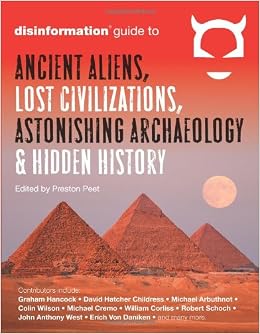
Image result for disinformation guide to ancient aliens lost civilizations
Where did "modern" civilization begin? What lies beneath the waves? Do myths describe interstellar impact? How'd they lift that stone? Was the Ark of the Covenant a mechanical device? Were there survivors of an Atlantean catastrophe? Who really discovered the "New" World? "Hidden history" continues to fascinate an ever wider audience. In this massive compendium, editor Preston Peet brings together an all-star cast of contributors to question established wisdom about the history of the world and its civilizations. Peet and anthology contributors guide us through exciting archaeological adventures and treasure hunts, ancient mysteries, lost or rediscovered technologies, and assorted "Forteana," using serious scientific studies and reports, scholarly research, and some plain old fringe material, as what is considered "fringe" today is often hard science tomorrow.

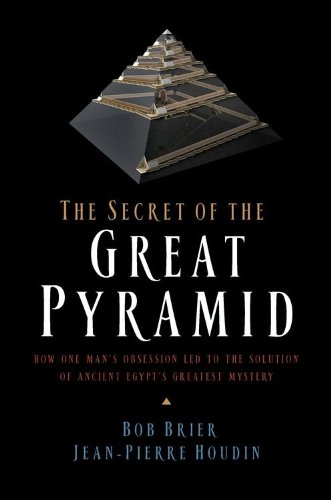
Image result for the secret of the great pyramid bob brier
A decade ago, French architect Jean-Pierre Houdin became obsessed by the centuries-old question: How was the Great Pyramid built? How, in a nation of farmers only recently emerged from the Stone Age, could such a massive, complex, and enduring structure have been envisioned and constructed?
Written by world-renowned Egyptologist Bob Brier in collaboration with Houdin, The Secret of the Great Pyramid moves deftly between the ancient and the modern, chronicling two equally fascinating interrelated histories. It is a remarkable account of the step-by-step planning and assembling of the magnificent edifice – the brainchild of an innovative genius, the Egyptian architect Hemienu, who imagined, organized, and oversaw a monumental construction project that took more than two decades to complete and that employed the services of hundreds of architects, mathematicians, boatbuilders, stonemasons, and metallurgists.

Image result for beloved disciple robin griffith jones
Mary Magdalene was the woman healed of her possession by seven devils and was the first to see the risen Jesus on Easter Day. Was she also the reformed prostitute who washed Jesus's feet with her tears? Was she the sister of the raised Lazarus? Did she marry Jesus? And did she become a leader of the early churches, despite the opposition of Simon Peter (who later became the first pope)? For centuries Mary Magdalene has been shrouded in mystery, but in Beloved Disciple renowned scholar Robin Griffith-Jones cuts through the confusion to bring this extraordinary figure back to startling, fascinating life.

Griffith-Jones examines New Testament accounts, ancient Gnostic sources, such as the Gospel of Mary, as well as medieval and Renaissance accounts of Mary's life and travels in the years following her discovery of Jesus's empty tomb on Easter morning. Beloved Disciple addresses questions about Mary and Jesus that have long stirred passionate debate, exploring the roles and power of men and women in the early churches—issues that still haunt the Church.

Illustrated with some of the most beautiful images of this enigmatic figure ever produced, this book puts the tantalizing fragments of information we have of Mary back into their original context: the vital stories in which Mary plays a part. Beloved Disciple shows us Mary as a model of discipleship and, through the lens of her life, offers a fresh perspective on the New Testament gospels and the Gnostic stories, to reveal them as we have never seen them before.

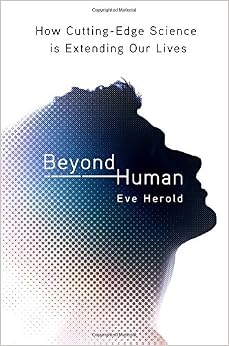
Image result for beyond human herold
Never before in the history of medicine has mankind faced such hope and peril as those of us poised to embrace the radical medical technologies of today.

Eve Herold's Beyond Human examines the medical technologies taking shape at the nexus of computing, microelectronics, engineering, nanotechnology, cellular and gene therapies, and robotics. These technologies will dramatically transform our lives and allow us to live for hundreds of years. Yet, with these blessings come complicated practical and ethical issues, some of which we can predict, but many we cannot.

Beyond Human taps the minds of doctors, scientists, and engineers engaged in developing a host of new technologies while telling the stories of some of the patients courageously testing the radical new treatments about to come into the market.

Beyond Human asks the difficult questions of the scientists and bioethicists who seek to ensure that as our bodies and brains become ever more artificial, we hold onto our humanity. In this new world, will everyone have access to technological miracles, or will we end up living in a world of radical disparities? How will society accommodate life spans that extend into hundreds of years? Will we and our descendants be able to bring about the dream of a future liberated by technology, or will we end up merely serving the machines and devices that keep us healthy, smart, young, and alive?


GENERAL DISCUSSION – The Children of Men by P.D. James:  Told with P. D. James’s trademark suspense, insightful characterization, and riveting storytelling, The Children of Men is a story of a world with no children and no future. The human race has become infertile, and the last generation to be born is now adult. Civilization itself is crumbling as suicide and despair become commonplace. Oxford historian Theodore Faron, apathetic toward a future without a future, spends most of his time reminiscing. Then he is approached by Julian, a bright, attractive woman who wants him to help get her an audience with his cousin, the powerful Warden of England. She and her band of unlikely revolutionaries may just awaken his desire to live . . . and they may also hold the key to survival for the human race. The Handmaid’s Tale by Margaret Atwood:  In the world of the near future, who will control women's bodies?  Offred is a Handmaid in the Republic of Gilead. She may leave the home of the Commander and his wife once a day to walk to food markets whose signs are now pictures instead of words because women are no longer allowed to read. She must lie on her back once a month and pray that the Commander makes her pregnant, because in an age of declining births, Offred and the other Handmaids are only valued if their ovaries are viable.  Offred can remember the days before, when she lived and made love with her husband Luke; when she played with and protected her daughter; when she had a job, money of her own, and access to knowledge. But all of that is gone now....Funny, unexpected, horrifying, and altogether convincing, The Handmaid's Tale is at once scathing satire, dire warning, and tour de force.

In this short talk,TED Fellow Sarah Parcak introduces the field of "space archaeology" — using satellite images to search for clues to the lost sites of past civilizations. 

Image result for american folklore and legend reader's digest
American Folklore and Legend by the editors of Reader’s Digest
An anthology of popular American stories, poems, songs, and lore that have become part of the folklore of the United States.

Image result for ain't nothing but a man nelson
Ain’t Nothing but a Man: My Quest to Find the Real John Henry by Scott Reynolds Nelson and Marc Aronson
Who was the real John Henry? The story of this legendary African-American figure has come down to us in so many songs, stories, and plays, that the facts are often lost. Historian Scott Nelson brings John Henry alive for young readers in his personal quest for the true story of the man behind the myth. Nelson presents the famous folk song as a mystery to be unraveled, identifying the embedded clues within the lyrics, which he examines to uncover many surprising truths. He investigates the legend and reveals the real John Henry in this beautifully illustrated book.

Nelson’s narrative is multilayered, interweaving the story of the building of the railroads, the period of Reconstruction, folk tales, American mythology, and an exploration of the tradition of work songs and their evolution into blues and rock and roll. This is also the story of the author’s search for the flesh-and-blood man who became an American folk hero; Nelson gives a first-person account of how the historian works, showing history as a process of discovery. Readers rediscover an African-American folk hero. We meet John Henry, the man who worked for the railroad, driving steel spikes. When the railroad threatens to replace workers with a steam-powered hammer, John Henry bets that he can drive the beams into the ground faster than the machine. He wins the contest, but dies in the effort.  Nelson’s vibrant text, combined with archival images, brings a new perspective and focus to the life and times of this American legend.

Image result for curious myths of the middle ages baring-gould
Curious Myths of the Middle Ages by Sabine Baring-Gould
First published in 1866, Curious Myths of the Middle Ages became a highly popular work and went through many editions. Edward Hardy has skillfully edited the original lengthy text into more concise form while carefully preserving Baring-Gould’s style and manner in the telling of these strange and compelling myths and legends that are so much a part of the Middle Ages. This edition is illustrated with numerous woodcuts by Albrecht Durer.

Image result for edith hamilton's mythology
Since its original publication by Little, Brown and Company in 1942, Edith Hamilton's Mythology has sold millions of copies throughout the world and established itself as a perennial bestseller in its various available formats. Mythology succeeds like no other book in bringing to life for the modern reader the Greek, Roman, and Norse myths and legends that are the keystone of Western culture - the stories of gods and heroes that have inspired human creativity from antiquity to the present.

Image result for bulfinch's mythology
The justly famous Mythology by Thomas Bulfinch contains three volumes: The Age Of Fable -- The gods and goddesses of Greece and Rome, as well as the mythology of the Germanic tribes, England and the Near East; The Legend Of Charlemange -- Accounts of the reign of the first great French Emperor, his wars and conquests; and The Age Of Chivalry -- King Arthur and his court, Lancelot and Guenever, and the death of Arthur.

Image result for legend dvd tom cruise
Legend (DVD)
A peasant hero battles a demonic underworld prince who seeks to plunge the world into an ice age. When the evil prince captures a fair maiden, the hero rallies an army of elves to save her, and defeat his diabolical foe once and for all.

Image result for robin hood dvd cover kevin costner


This film is a '90s version of the classic Robin Hood story, with Kevin Costner starring as the good-guy thief. Costner is joined in his efforts against the murdering Sheriff of Nottingham (Alan Rickman) by Morgan Freeman who plays a philosophizing Moor, and by Nick Brimble, who plays Little John (anything but little). After Robin barely survives a watery skirmish with Little John, the two become allies and Robin joins forces with Little John's band of robber thieves to overcome the evils of the dastardly Nottingham sheriff. 


GENERAL DISCUSSION – Willow (DVD):  Though Willow was one of director Ron Howard's few box-office disappointments, it definitely deserves a second look. At once an epic celebration and a gentle spoof of the sword-and-sorcery genre, the film concerns the efforts by little person Willow Ufgood (Warwick Davis) to protect a sacred infant from the machinations of a wicked queen (Jean Marsh). Incidentally, this is the film where co-star Val Kilmer met his future wife Joanne WhalleyLadyhawke (DVD):  In medieval France, a young, nebbishy pickpocket befriends a knight who has fallen under a strange curse. It is soon up to the pickpocket to help reunite the knight and his lady love and defeat the evil bishop behind the curse in this romantic fantasy film.

What are YOU reading/watching?


Wednesday, December 2, 2015

Pets and Animals

The final Genre Reading Group meeting of the year will take place on Tuesday, December 29th at 6:30pm, as usual.  The library will be on Holiday Hours and will be closed, but I will be here to let you in to the building.  It will be one of our biannual Salon Discussion so there is no assigned topic.  You may bring whatever kind/topic of book you’d like to share with the group.

Last week, GRG met to discuss pets & animals!

Buttercups and Daisy by Elizabeth Cragoe
This book is too old and too obscure and as such, has fallen off the radar.  I have found no official reviews, so here is my personal one. Elizabeth Cragoe and her husband, city dwellers both, pick up and move to the Welsh countryside in the early 1970’s to take up life as dairy farmers in this charming tale, told during the moment in history when industrialized farming was just beginning to become popular.  She speaks candidly about how her animals fare in making the swap to more industrial milking practices as well as how chickens perform in battery cages.  It is an interesting look at the lives of rural Welsh farmers (I cannot pronounce ANY of the farms, landscape features, nor most of the characters’ names) as well as the evolution of farming in Europe.  I love her family and look forward to reading more of her books out there in the world if I can find them.

Once Upon a Flock: Life With My Soulful Chickens by Lauren Scheuer
(amazon) When longtime illustrator and lover of power tools Lauren Scheuer was looking for a project, she got the idea to raise backyard chickens. Her husband and teenage daughter looked on incredulously as coop sketches and chicken-raising books filled their New England home. But when the chicks arrived, the whole family fell in love with the bundles of fluff and the wild adventures began. 


Rabbit series by John Updike
(wikipedia) Updike's most famous work is his "Rabbit" series (the novels Rabbit, RunRabbit ReduxRabbit Is RichRabbit at Rest; and the novella Rabbit Remembered), which chronicles the life of the middle-class everyman Harry "Rabbit" Angstrom over the course of several decades, from young adulthood to death. Both Rabbit Is Rich (1982) and Rabbit at Rest (1990) were recognized with the Pulitzer Prize. Updike is one of only three authors to win the Pulitzer Prize for Fiction more than once (the others were Booth Tarkington and William Faulkner). He published more than twenty novels and more than a dozen short story collections, as well as poetry, art criticism, literary criticism and children's books. Hundreds of his stories, reviews, and poems appeared in The New Yorker starting in 1954. He also wrote regularly for The New York Review of Books.

Nova: Dawn of Humanity (2015)

NOVA and National Geographic present exclusive access to an astounding discovery of ancient fossil human ancestors. Deep in a South African cave, a special team of experts has brought to light an unprecedented wealth of fossils belonging to a crucial gap in the record of our origins that spans the transition between the ape-like australopithecines (such as the famous Lucy) and the earliest members of the human family. At the center of the discovery is paleoanthropologist Lee Berger, a character brimming with enthusiasm and opinions, whose claims have stirred long controversy in the contentious field of human origins. Join NOVA to solve a two million year-old "crime scene" and dig into extraordinary new clues about what made us human.


(amazon) The heartwarming tale of an irrepressible donkey who needed a home―and forever changed a family. Rachel Anne Ridge was at the end of her rope. The economy had crashed, taking her formerly thriving business along with it. She had been a successful artist, doing work she loved, but now she felt like a failure. How would her family pay their bills? What would the future hold? If only God would somehow let them know that everything was going to be all right . . . and then Flash the donkey showed up.

(amazon) When Humphrey hears that school is ending, he can't believe his ears. What's a classroom hamster to do if there's no more school? It turns out that Mrs. Brisbane has planned something thrilling for Humphrey and Og the frog: they're going to Camp Happy Hollow with Ms. Mac and lots of the kids from Room 26! Camp is full of FUN-FUN-FUN new experiences, but it's also a little scary. There are fur-raising wild sounds and smells, and there's something called the Howler to watch out for. Humphrey is always curious about new adventures, but could camp be too wild even for him?


The Hamster in Our Class by Kathleen Tracy
(amazon) Playful and affectionate, hamsters can make terrific class pets. In this book you'll learn about the different types of hamsters, whether they like to live alone or in groups, what kind of food they eat, how much exercise they need, and the best kind of cage for them. Hamsters can be shy at first, but once they get to know you, they can be held. They will make a delightful addition to any classroom.


The Red Pony by John Steinbeck
(amazon) Written at a time of profound anxiety caused by the illness of his mother, Nobel Prize winner John Steinbeck draws on his memories of childhood in these stories about a boy who embodies both the rebellious spirit and the contradictory desire for acceptance of early adolescence. Unlike most coming-of-age stories, the cycle does not end with a hero “matured” by circumstances. The Red Pony is imbued with a sense of loss. Jody’s encounters with birth and death express a common theme in Steinbeck’s fiction: They are parts of the ongoing process of life, “resolving” nothing. The Red Pony was central not only to Steinbeck’s emergence as a major American novelist but to the shaping of a distinctly mid twentieth-century genre, opening up a new range of possibilities about the fictional presence of a child’s world.


The Pugilist at Rest: Stories by Thom Jones
In the short story "I Want to Live," Mrs. Wilson is a woman diagnosed with an advanced cancer. Her husband had died from cancer ten years earlier. Her memories of the past include a very precocious chicken.


Essays of E.B. White by E.B. White
(nytimes.com) “In 1948, E. B. White wrote "Death of a Pig" which appeared in Atlantic Monthly, an oddly affecting account of how he failed to save the life of a sick pig, made ironic by the fact that the pig had been bought to act its part in the "tragedy" of the spring pig fattened for winter butchering. Since literature is not life, White set out in "Charlotte's Web" to save his pig in retrospect, this time not from an unexpected illness but from its presumably fated "tragedy."” 

Read “Death of a Pig” here:
http://www.theatlantic.com/magazine/archive/1948/01/death-pig/309203/

(amazon) How much of an impact can an animal have? How many lives can one cat touch? How is it possible for an abandoned kitten to transform a small library, save a classic American town, and eventually become famous around the world? You can't even begin to answer those questions until you hear the charming story of Dewey Readmore Books, the beloved library cat of Iowa.

Dewey's story starts in the worst possible way. Only a few weeks old, on the coldest night of the year, he was stuffed into the returned book slot at the Spencer Public Library. He was found the next morning by library director, Vicki Myron, a single mother who had survived the loss of her family farm, a breast cancer scare, and an alcoholic husband. Dewey won her heart, and the hearts of the staff, by pulling himself up and hobbling on frostbitten feet to nudge each of them in a gesture of thanks and love. For the next nineteen years, he never stopped charming the people of Spencer with his enthusiasm, warmth, humility, (for a cat) and, above all, his sixth sense about who needed him most.

As his fame grew from town to town, then state to state, and finally, amazingly, worldwide, Dewey became more than just a friend; he became a source of pride for an extraordinary Heartland farming town pulling its way slowly back from the greatest crisis in its long history.

What are YOU reading?